You are here: Home > Products & Solutions > Railway Transport Accessories > Details
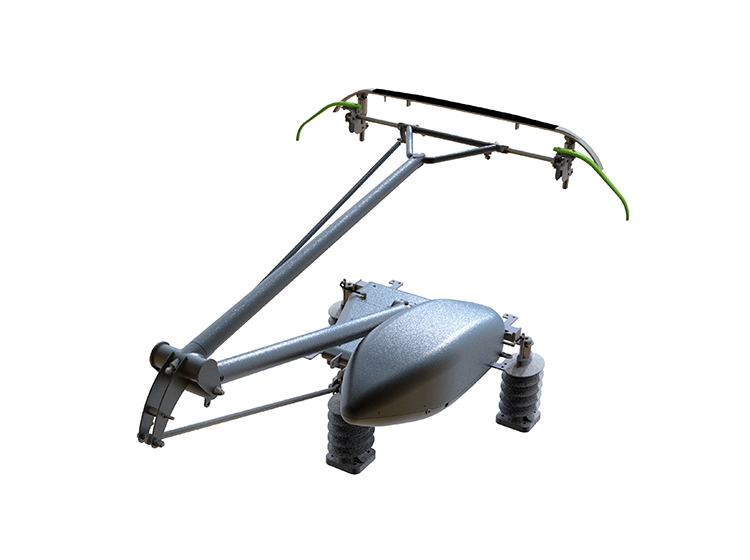
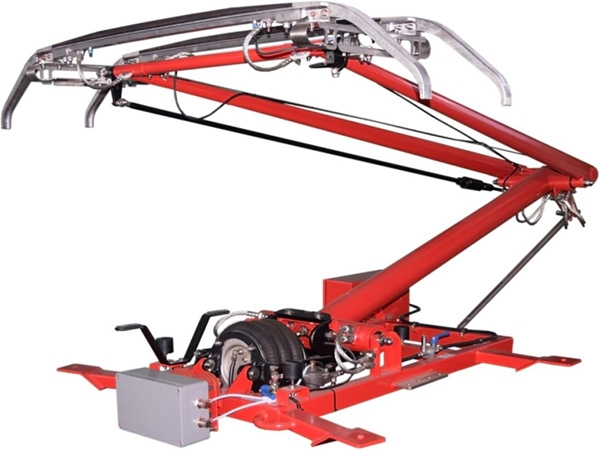
The pantograph is installed on the roof, and its main function is to collect catenary current and supply it to the vehicle. Its main structures include the pantograph head, upper arm, upper guide rod, lower arm, lower guide rod, underframe, pantograph lifting device, etc. During the lifting of pantograph, the locomotive supplies compressed air. This air is regulated for pressure and flow rate via the pneumatic control valve block and enters the pantograph lifting device (air spring). The air spring pushes the lower arm and other articulated mechanisms to lift the pantograph. During the lowering of pantograph, the compressed air inside the pantograph lifting device (air spring) is discharged through the pneumatic control valve block, and the pantograph is lowered under its own weight. The pantograph of CRRC Datong is widely used in high-speed railways, EMUs, electric locomotives and intercity trains, covering speeds of 400 km/h, 350 km/h, 250 km/h, 200 km/h, 160 km/h, and 120 km/h.
Main products: CED180, DSA200, DSA250, DSA380, CED420 and CED450
1.Pantograph-catenary dynamics technology
2.Aerodynamics technology
3.System integration technology
4. Active control technology
5.Structure reliability assurance technology
| Name |
Content |
| Design speed |
120-400 km/h |
| Rated voltage |
25 kV |
| Rated current |
1000 A |
| Ambient temperature |
-40 ℃至+70 ℃ |
| Nominal static contact force |
70-80 N(adjustable) |
| Pantograph lifting/lowering time |
≤10 s |
| Height of pantograph-dropping position |
660-760 mm |
| Operating height range |
≥1800 mm |
| Compressed air pressure |
0.4-1.0 Mpa |

Copyright: CRRC Datong Co., Ltd. 2016 JICPB No. 15050284Technical Support: CRRC Information Technology Co., Ltd.