You are here: Home > Products & Solutions > Environmental Protection Industry > Details
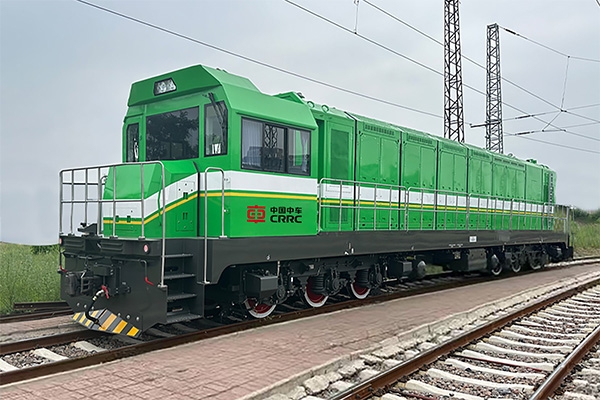
The power battery system is designed to undergo battery swapping at a top-mounted swap station, with the operation being simple and swift. The top of the battery compartment container is aligned with the locomotive's roof, and there are no barriers between the battery compartment, the vehicle body, and the compartment walls.
The power battery system primarily consists of the power battery box and the battery swapping base.
The power battery system is designed as a container-style battery compartment, where the container body forms part of the vehicle exterior. Both sides of the container are equipped with Chinese standard charging ports. To facilitate the overall battery swapping process, the bottom of the battery compartment is securely fastened to the upper surface of the frame with fastening bolts. All output cables are connected via quick-release connectors, and bolts that are frequently disassembled must be regularly replaced.
The power battery box is composed of the battery box, PDU, LVCU, high- and low-voltage wiring harnesses, communication cables, water pipes, water-cooling unit, and fire protection system.
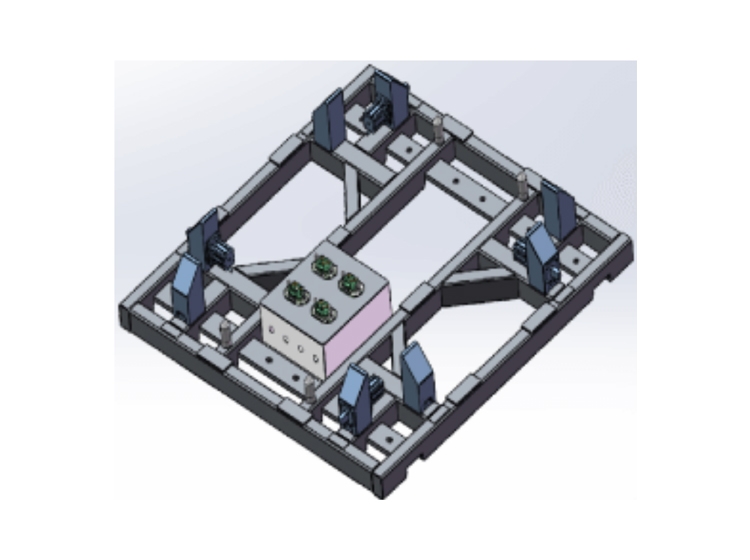
The battery swapping base mainly consists of a base frame, quick-release connectors, locking mechanisms, and guide pillars.
The power battery system is equipped with an advanced intelligent thermal safety management system that cools or heats the battery, ensuring precise temperature control with low power consumption, effectively extending the battery life by over 50%.
The power battery system incorporates a lithium battery composite fire detector and suppression device, capable of early detection, warning, and suppression of thermal runaway conditions within the battery. A perfluorohexanone fire suppression system is employed, featuring environmentally friendly, non-conductive insulating materials. This system rapidly cools the battery without causing damage or secondary harm to the battery or electrical components, ensuring the safe and stable operation of the power battery system.

Copyright: CRRC Datong Co., Ltd. 2016 JICPB No. 15050284Technical Support: CRRC Information Technology Co., Ltd.