


A 16-minute, 30-second segment on CCTV-1 explored how CRRC Changchun Railway Vehicles Co., Ltd. combines a longstanding tradition of craftsmanship with modern digital traceability to safeguard train quality and passenger safety.
The segment appeared in the opening episode of the second season of China’s Record of Craftsmanship, an industrial culture program jointly produced by China Media Group and the Ministry of Industry and Information Technology. The season premiered on September 20.
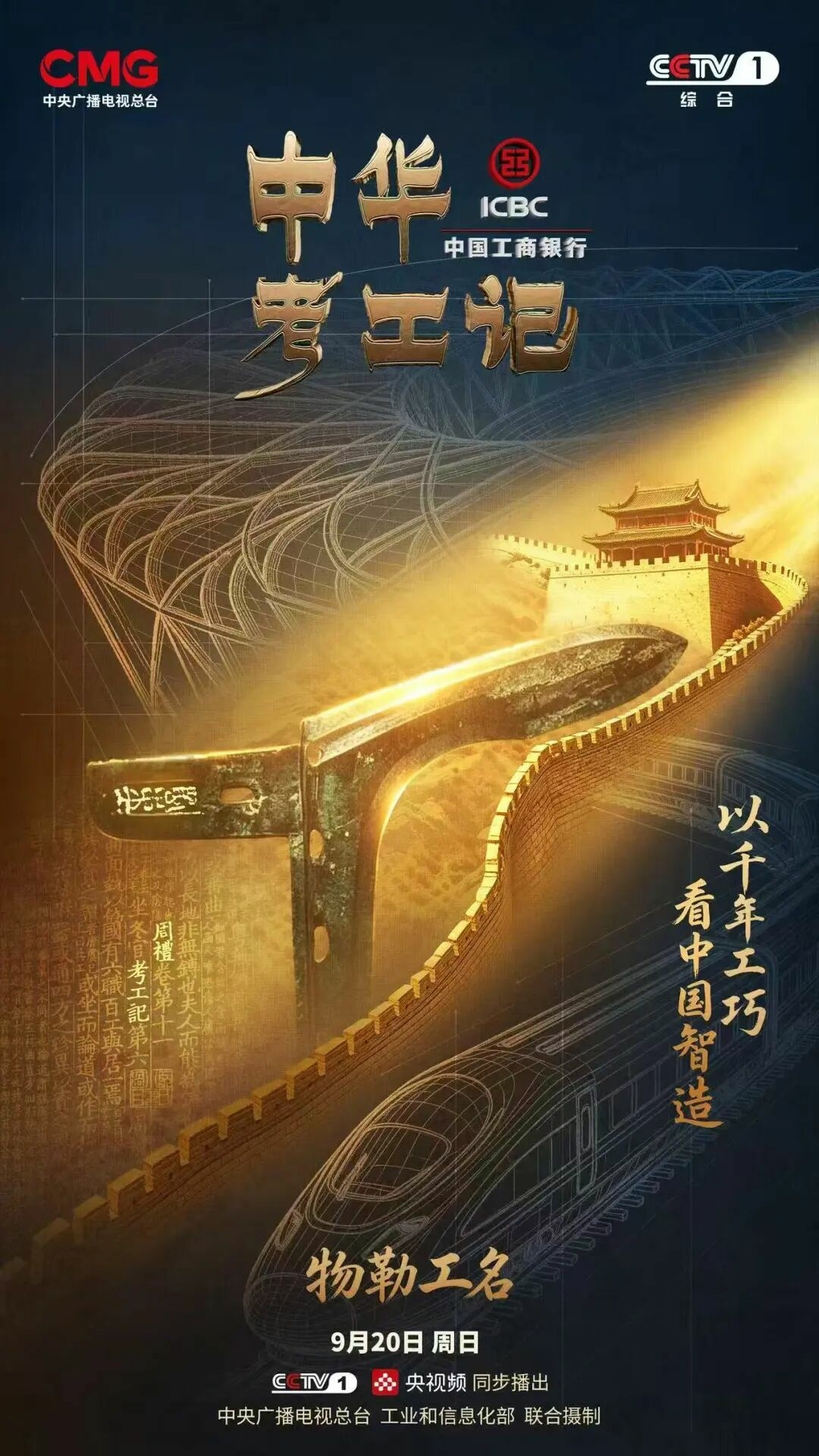
Tracing the company’s development from the KDZ1, China’s first domestically developed electric multiple unit (EMU), to today’s Fuxing intelligent high-speed trains, the program examined the principle of identifying craftspeople on the products they make. Rooted in an ancient practice of inscribing makers’ names on manufactured objects, this approach links quality with individual responsibility. Today, digital records carry that tradition forward.
Digital Traceability Throughout Manufacturing
Producing a Fuxing train involves more than 13,000 manufacturing steps, each linked to an identified operator. Digital records make it possible to trace work throughout production.
In the welding workshop, unique component codes connect each part to records of the personnel involved. Welders scan codes to register their work, while digital displays show operator IDs and corresponding work locations, supporting subsequent quality checks and traceability.
In the aluminum alloy assembly workshop, component codes identify the project, train model, and serial number, linking individual parts to production records and responsible personnel. During final assembly, cables and connections receive dedicated labels identifying the operators who completed the work.
Traceability continues after delivery. Operating data and maintenance records are retained throughout each train’s service life, creating a digital record that supports ongoing monitoring and maintenance.
This system is underpinned by an extensive manufacturing network. A Fuxing train brings together more than 40,000 components, supported by over 2,100 supplier companies and 6,900 small and medium-sized enterprises.
Technology Supports Precision and Accountability
The program also demonstrated how intelligent torque wrenches improve manufacturing precision. These tools control the torque applied to bolts and upload work data in real time, allowing the tightening process to be reviewed.
With more than 100,000 bolts on a Fuxing train, accurate fastening is essential to structural integrity, airtightness, and noise control. Digital tools help ensure that each fastening operation meets its specified requirements and remains traceable.
From Hand-Drawn Designs to Future Rail Technologies
The program revisited the KDZ1, completed in 1988 at Changchun Railway Vehicles Factory, CRRC Changchun’s predecessor. Developed using domestic technology, it marked an early milestone in China’s independent EMU development.
A hand-drawn design from 1985 showed how accountability was documented before digital systems: signatures from designers and reviewers, drawing numbers, and component annotations formed part of the paper archive. These records preserved both the technical development process and the contributions of individual engineers.
Looking ahead, the company’s research includes superconducting electrodynamic suspension maglev trains with a design speed of 600 km/h, alongside hydrogen-powered suburban, tourism, and multiple-unit trains.
As technology evolves, the pursuit of excellence in quality remains at the heart of Chinese manufacturing.
